Anyone can survive hard things. What breaks people isn’t the weight — it’s carrying it with no one beside them.
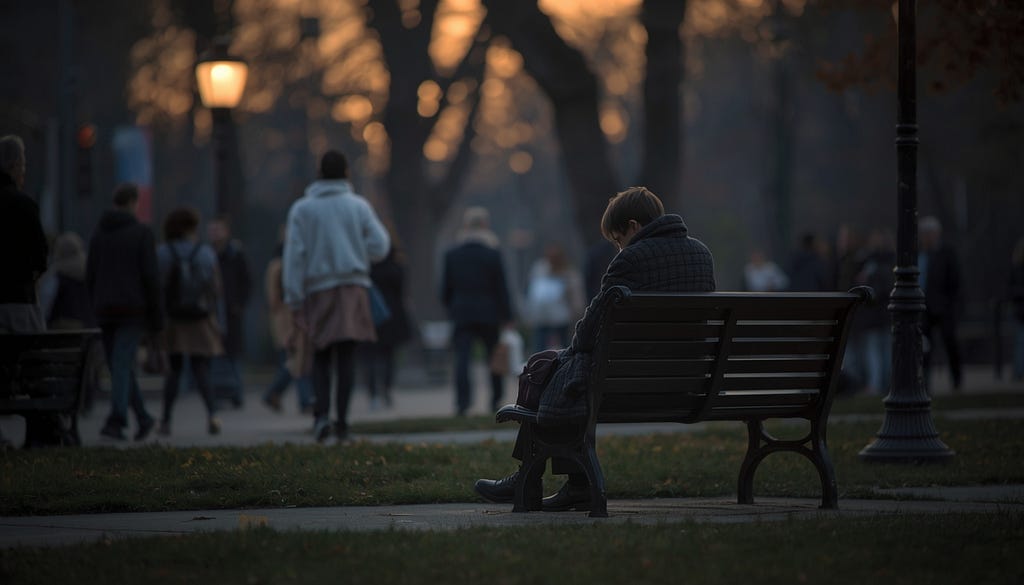
There are two kinds of hard.
The first kind is the hard thing itself — the loss, the failure, the grief, the situation that turned your life upside down without asking permission. That kind of hard is visible. Nameable. People can see it, acknowledge it, rally around it.
The second kind is quieter and in many ways heavier.
It’s going through the hard thing with no one truly beside you.
Not alone in the physical sense — you might have had people around. Family in the next room. Friends a phone call away. Colleagues who asked how you were doing and waited politely for the answer.
But alone in the way that matters. Alone in the sense that nobody fully understood what you were carrying. Nobody sat with you in the real weight of it. Nobody knew the version of the story that happened after you said “I’m fine” and went back to your room.
That kind of alone — the alone that exists inside a room full of people — is the hardest kind there is.
And if you’ve felt it, you already know exactly what I mean.
When the People Around You Couldn’t Hold It
It’s a specific kind of pain when you reach out and the hand isn’t quite there.
Not because people didn’t care. Most of them did, in the way they knew how. But caring about someone and being able to truly hold space for their pain are two completely different things. And the gap between those two things — the gap between being loved and being truly understood — can feel like the loneliest place in the world.
Maybe you tried to tell someone what you were going through and watched their face shift — not with cruelty, but with discomfort. The conversation moved on too quickly. They offered solutions when you needed silence. They compared your situation to something smaller. They told you it would be okay before they gave you room to say that right now, it wasn’t.
Maybe you stopped trying after a while.
Not because you gave up on people. But because the experience of reaching out and not quite being caught — over and over — taught you something painful:
That it was safer to carry it yourself than to hand it to someone who might drop it.
So you got quiet. You got good at managing it internally. You developed the skill — and it is a skill, a hard won one — of processing alone.
And nobody around you knew how much that cost.
The Loneliness Nobody Names
We talk about loneliness like it’s about being physically alone.
But the loneliness that does the most damage is the kind you feel in the middle of a conversation with someone who loves you. The kind that comes from realizing, mid sentence, that you are performing okayness rather than actually being okay. The kind that settles in after a phone call where you talked for an hour and said nothing real.
That loneliness has no name in most languages.
There’s no word for the specific ache of being surrounded by people who care about you and still feeling completely unseen.
But you know the feeling.
You’ve sat at dinner tables full of laughter while something inside you was breaking quietly. You’ve attended celebrations while privately carrying grief that had nowhere to go. You’ve answered “how are you” a thousand times with words that bore no resemblance to the truth — not because you were dishonest, but because the truth was too large and the moment was too small and you weren’t sure anyone was really asking.
That is the loneliness I’m talking about.
And it is more common than anyone admits.
What It Does to You Over Time
Going through hard things alone — truly alone, in the way that matters — leaves a particular kind of mark.
It teaches you self sufficiency in the deepest sense. You become extraordinarily capable of managing your own internal world. Of processing pain without externalizing it. Of holding yourself together through things that should have had more hands on them.
This looks like strength from the outside.
And in some ways it is.
But it also builds walls you didn’t consciously choose. It trains you to expect that support isn’t coming — so you stop leaving space for it. It makes vulnerability feel more dangerous than it actually is, because you learned, through experience, that opening up doesn’t always lead somewhere safe.
It makes you independent in the way that loneliness makes people independent — not from confidence, but from necessity.
And there is a difference.
The person who doesn’t need help because they’re genuinely supported and secure — they feel light. Open. Easy in the world.
The person who doesn’t need help because they learned nobody was truly coming — they feel capable, yes. But also guarded. Careful. Quietly waiting for the moment when the ground shifts again and they’ll have to handle it, like always, on their own.
If you recognize yourself in that second description — this is for you.
The Unfairness of It
I want to say something that doesn’t get said enough:
It wasn’t fair.
Whatever you went through — whatever season of your life required more from you than you had, whatever pain you processed in private because there was no other option, whatever weight you carried without adequate support —
It wasn’t fair that you had to do it that way.
You deserved someone who could sit with you in it. Someone who didn’t flinch or fix or move on too quickly. Someone who could hold the weight of the real story — not the edited version, not the one designed to make other people comfortable — but the actual, honest, full weight of what you were living.
You deserved that.
The fact that you didn’t have it is not a reflection of your worth. It’s not proof that you’re too much or too complicated or too difficult to support. It’s not evidence that you were meant to do this alone.
It’s just what happened.
And what happened was hard.
And you got through it anyway.
And that matters enormously — even if nobody was there to witness it.
The Gift You Didn’t Ask For
Here is the strange, complicated truth about going through hard things alone:
It gives you something.
Not something that makes the loneliness worth it — nothing makes that worth it. But something real nonetheless.
It gives you a capacity for depth that people who’ve always been held can’t quite access. A patience with other people’s pain that comes from knowing what it feels like to have yours minimized. An instinct for the people in your life who are struggling silently — because you know exactly what that silence sounds like from the inside.
You became someone who knows how to be present for people in the dark. Not because you read about it. Not because someone taught you. But because you lived in that dark yourself and you remember, with perfect clarity, what you needed and didn’t have.
That capacity — to be for someone else what you needed and didn’t get — is one of the most profound things a human being can become.
You didn’t ask for it. You earned it the hard way.
But it is yours. Completely, permanently yours.
You Don’t Have to Do the Next Hard Thing Alone
Here is what I want to leave you with — not as comfort, but as truth:
The fact that you went through the last hard thing alone does not mean you have to go through the next one that way.
The walls you built were necessary once. The self sufficiency you developed kept you standing when nothing else did. The quiet you retreated into was the safest place available at the time.
But safety needs change.
And the version of you that learned to need no one — that version protected you when you needed protecting. But it might be keeping out the very things you need now. The connection. The support. The experience of being truly held by someone who has the capacity to do it.
You are allowed to let people in now.
Not all people. Not immediately. Not without discernment.
But slowly. Carefully. Starting with the ones who have already proven — in small ways, in quiet moments — that they can hold things without dropping them.
You went through the hardest part alone.
You don’t have to keep living that way.
If this found you at the right moment, there’s more at dailyquotemotive.com — a quiet place for the people who’ve been carrying things longer than anyone knows.
If someone in your life has been going through something alone — reach out today. Not tomorrow. Today. Sometimes all it takes is one person who doesn’t move on too quickly.
If this resonated — follow me here on Medium. I write like this every few days. You might need the next one too.